Wooby

Bedtime Poems for Kids to Help Children Sleep Peacefully
Published On: 10 August 2026
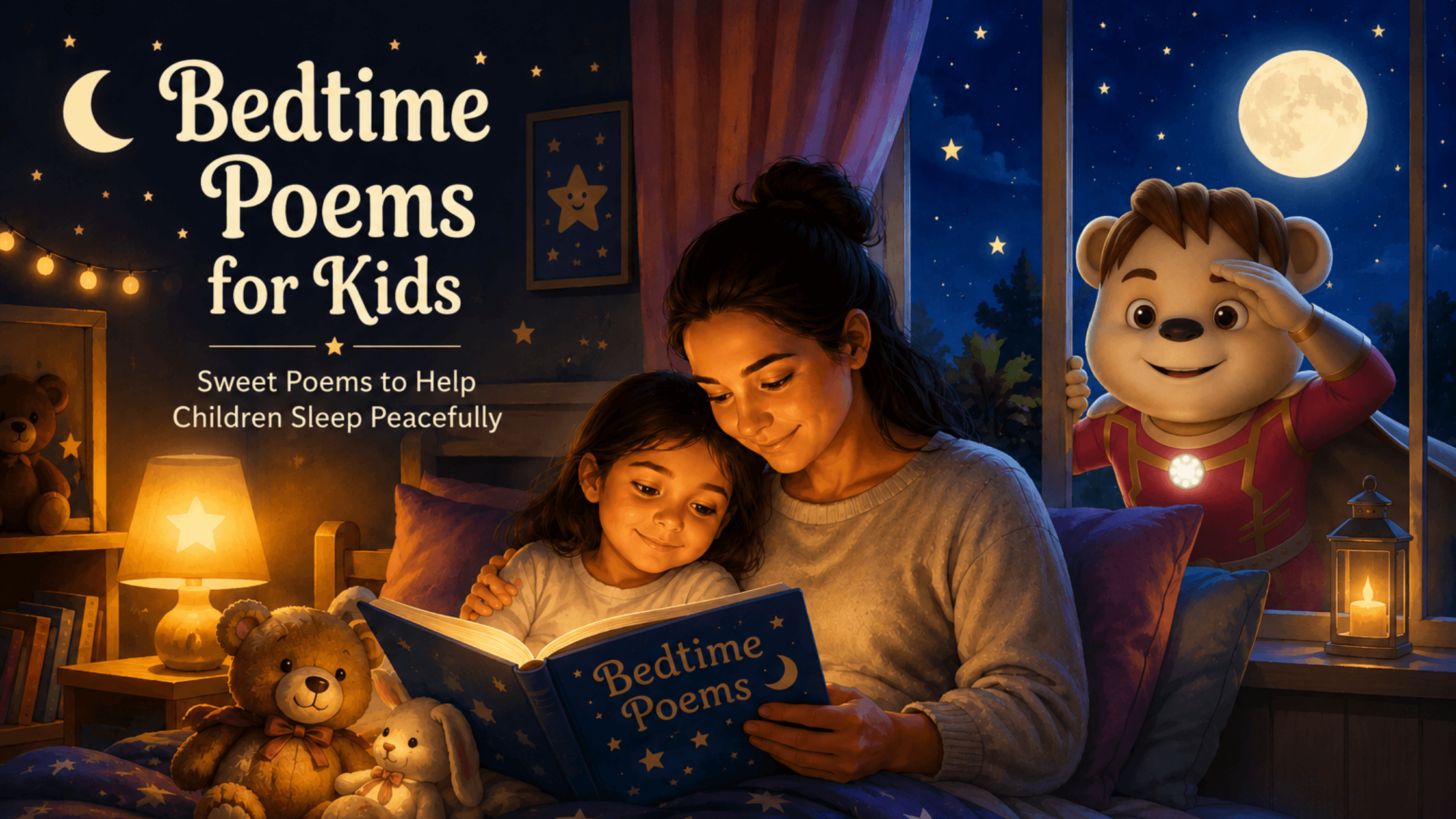
Every parent knows that feeling․ The day is done‚ it's dinner time‚ bedtime should be soon‚ and yet your child still has enough energy to bounce off the walls․ One more game․ One more snack․ "Just five more minutes‚ please․"
Sound familiar?
Here's a tiny thing that helps: bedtime poems for kids‚ not a fancy sleep system․ Not an expensive white noise machine․ Just a soft poem‚ a warm blanket‚ and your voice reading soft and low in a dim room is enough to quiet even the busiest little boy․
Why Bedtime Poems Are Good for Kids
Children's brains like rhythm and repetition‚ so when I read a rhyming poem in a slow‚ measured voice‚ something almost physical happens: their breathing slows‚ their body relaxes‚ and their busy little mind finally starts to let go of the day․
It is as though we invented magic‚ though we didn't․ Children feel secure in predictable‚ repetitive patterns․ And then the rhyme comes‚ as they expect‚ like a warm hug․ And in that gentle rhyme is a feeling: everything is okay‚ it's time to sleep․
Bedtime poems also help children to fall asleep more easily‚ build vocabulary‚ improve listening skills‚ and develop imagination․ Perhaps most importantly‚ they create those few minutes of quality‚ phone-free time with your child, which‚ over time‚ build into something truly beautiful․
Quick Benefits of Bedtime Poems
Helps children relax before sleep
Creates a calming nighttime routine
Encourages emotional bonding
Improves listening and language skills
Reduces bedtime anxiety
Sparks creativity and imagination
Builds positive sleep habits
Short and rhythmic poems are especially comforting because children enjoy predictable sounds and soothing repetition.
Short Bedtime Poems for Kids
Moonlight Wishes
The moon is shining gently in the sky, too.
The stars in the sky are passing by while they are drifting off to sleep.
Close your eyelids, be still, and hold tight to your pillow
You will see happy dreams every single night until the sun comes up.
Little Cloud Boat
There is a little cloud that is floating high up in the sky.
If you see a cloud that is floating high in the sky.
It’s carrying your dreams safely to where your heart rests so that you can go to bed and fall asleep.
Teddy’s Yawn
Teddy is yawning and closing his eyes; the night is filled with stars!
Your blankets are soft, and your head is resting on your pillow.
So now it is a nice, warm, soft bed for you to sleep in.
Sleepy Forest
Quiet trees begin to sway,
Busy birds have flown away.
Crickets sing a gentle tune,
Underneath the glowing moon.
Star Pillow,
The trees are peaceful when they move back and forth
The birds are no longer flying through the sky
The crickets sing softly,
And the moonlightens.
Star Pillow
Put your head on your star,
Imagine the whole world over.
Night will stay warm and protect you
It radiates a soothing feel.
Funny Bedtime Poems for Kids
The Snoring Dinosaur
A dinosaur wearing green pajamas,
He looked the silliest of all the other dinosaurs.
He brushed his teeth, got into bed,
He snored so loud that the cat ran away!
Sleepy Banana
A banana danced with fuzzy socks,
The clocks of bedtime ticked.
He finally got into bed with a big slump,
And dreaming about banana cream pie!
Benefits of Reading Poems Before Sleep
Right Routines for a healthy Brain Boost for activities they will perform the next day, and reduce screen time strains on their eyes
1. Encourages children to relax without the use of a screen
2. Improve Emotional self-regulation
3. Broaden your vocabulary naturally
4. Creates an expected bedtime routine
5. Gives the children a feeling of safety and love.
Due to their calming nature and familiarity, children have a good response to rhythmic and repetitive patterns. (expert testimony style)
Child development professionals frequently recommend putting children to bed at the same time every night because of the sleep and emotional stability that bedtime routines provide. When parents read a book of calming poetry to their young child every night before bed, the child's brain knows that it is time to begin relaxing or getting ready to go to sleep.
Child development experts often recommend consistent bedtime routines because they support emotional stability and healthy sleep cycles. Reading calming poetry each night can signal to a child’s brain that it is time to relax and prepare for rest.
Tips to develop a calming nighttime routine
A calm bedtime routine will help your children fall asleep easily and wake up happy.
Step 1: Turn Down The lights
A soft light will create a calm bedroom and help your child's body prepare for sleep.
Step 2: Read a book to your Child
When you read bedtime rhymes or Tale books to your child, it helps to bond emotionally and feel secure.
Do not use your phone before bed. If you don’t let your kids use their phones for at least half an hour to an hour before bed, they are more likely to fall asleep.
Soothing music creates a reassuring bedtime experience with a peaceful setting. Listen to gentle lullabies or instrumental music at bedtime to create a peaceful and soothing atmosphere. If you have a set bedtime, then you’re teaching your kids good sleep habits.
Voice Search-Friendly Answer
How can parents create a calming bedtime routine for kids?
Parents can create a relaxing bedtime routine by dimming lights, reading poems together, avoiding screens, playing soft music, and maintaining a consistent bedtime schedule.
The simple act of reading bedtime poems can turn ordinary nights into warm and comforting memories. These quiet moments help children feel safe, loved, and emotionally connected before sleep.
Whether you choose calming rhymes, funny poems, or soft nighttime verses, bedtime poetry creates a peaceful routine that children often remember for years.
Tonight, snuggle close, lower the lights, and share a few loving words before sleep.
FAQs
What are the best bedtime poems for kids?
The best bedtime poems for kids are short, calming, rhythmic, and easy to understand. Gentle themes like Twinkle Twinkle Little Stars, " " Moonlight, Dreams, and " Animals " work especially well.
How do poems help children sleep?
Poems help children sleep by calming their minds, reducing anxiety, and creating a peaceful bedtime environment through soothing rhythm and repetition.
Can bedtime poems improve child development?
Yes. Bedtime poetry supports language development, listening skills, imagination, and emotional bonding between parents and children.
What age is best for bedtime poetry?
Children as young as toddlers can enjoy bedtime poetry. Simple rhymes are ideal for ages 2–8.
Are bedtime poems better than bedtime stories?
Both are helpful. Poems are usually shorter and more rhythmic, while stories provide longer imaginative experiences. Many parents use both together.
