Wooby

Top 20 Best Panchatantra Stories in English for Kids
Published On: 10 August 2026
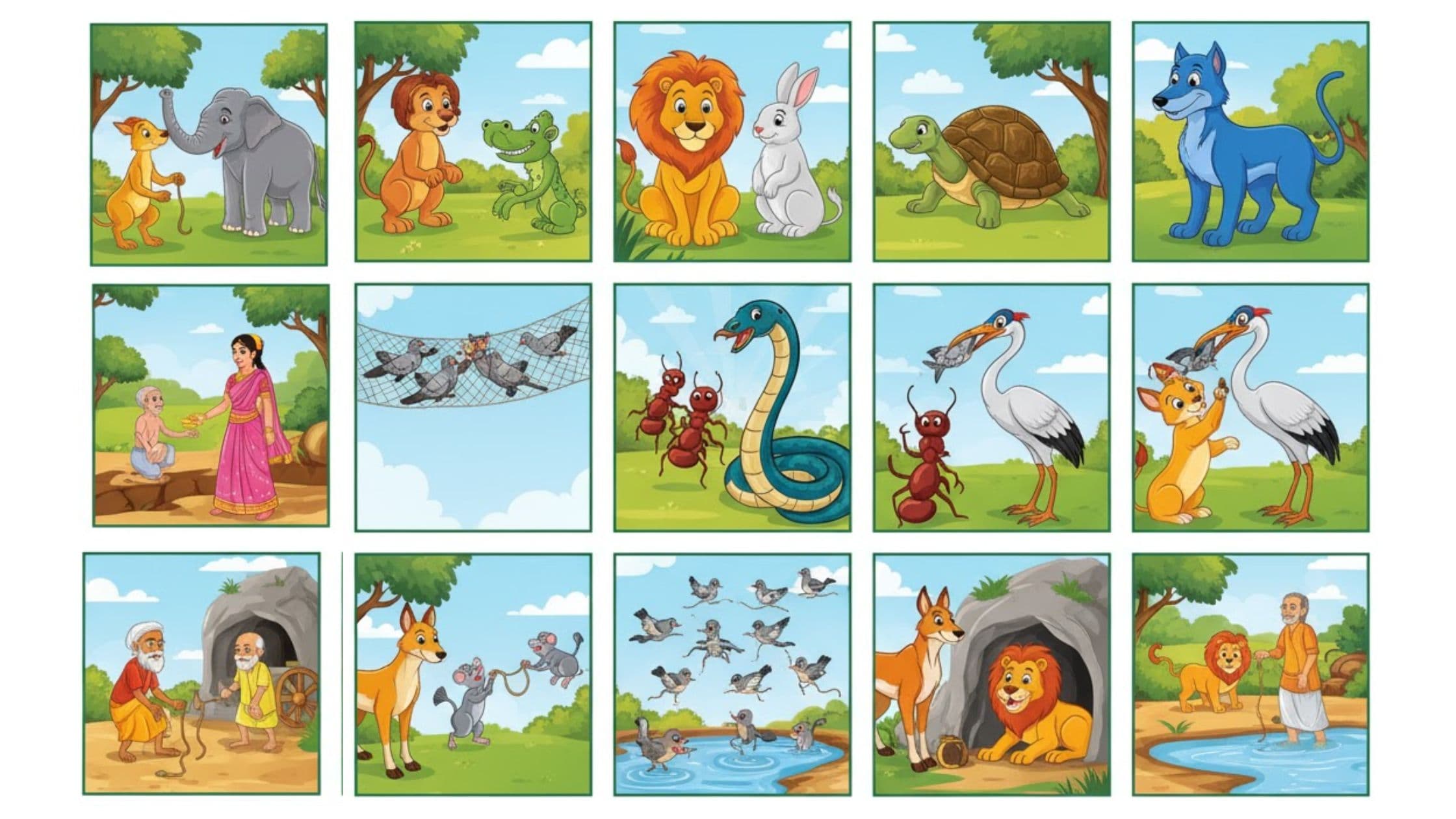
We all love to listen to stories, and especially kids, at their age, stories not only help them connect with the history but also make them love the movement. Panchatantra stories have delighted children for generations with their imaginative plots, engaging characters, and timeless moral lessons. These tales, filled with wisdom, teach essential life values in a simple, memorable way. Dive into our list of 20 best Panchatantra stories in English to share with your kids for fun-filled learning.
1. The Monkey and the Crocodile
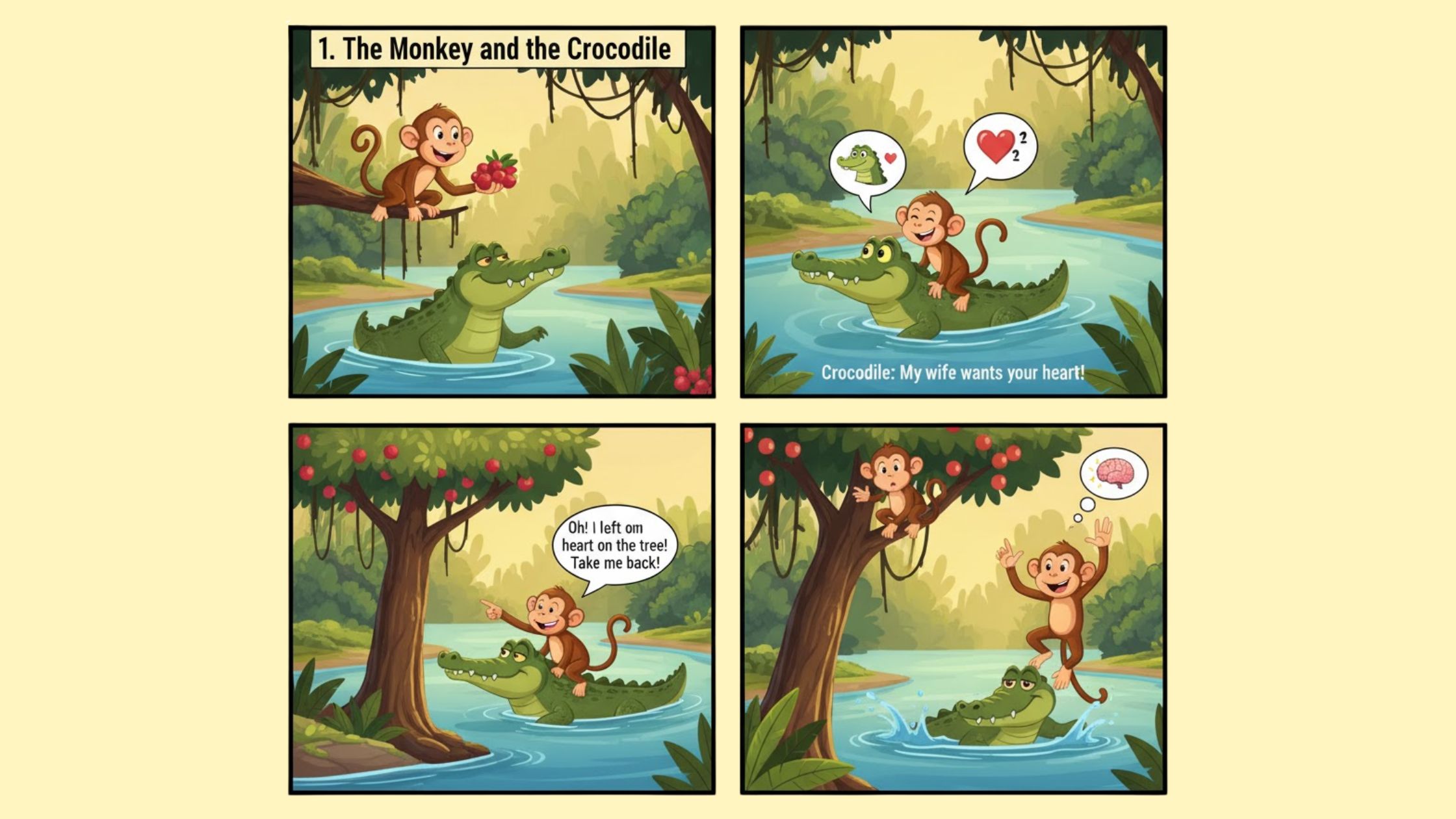
A monkey and a crocodile become friends in a jungle, and both have a lot of fun together, with the monkey generously sharing fruits from his tree and the crocodile making him swim the river by carrying the monkey on his back. But one day the crocodile’s wife wished to eat the monkey’s heart as her present on her birthday as a gift. The crocodile went to the monkey and took him on his back, and as they were both friends, he told him everything on the way. The clever monkey tricks the crocodile by saying he will give his heart to the crocodile's wife as a present happily, but as he has not told him about that, he forgets the heart on the top of the tree and asks the crocodile to take him to the tree so that he can bring the present, and the crocodile agrees. Then the monkey escapes quickly by making the crocodile a fool.
Moral: Stay calm and think on your feet during tough times.
2. The Lion and the Rabbit
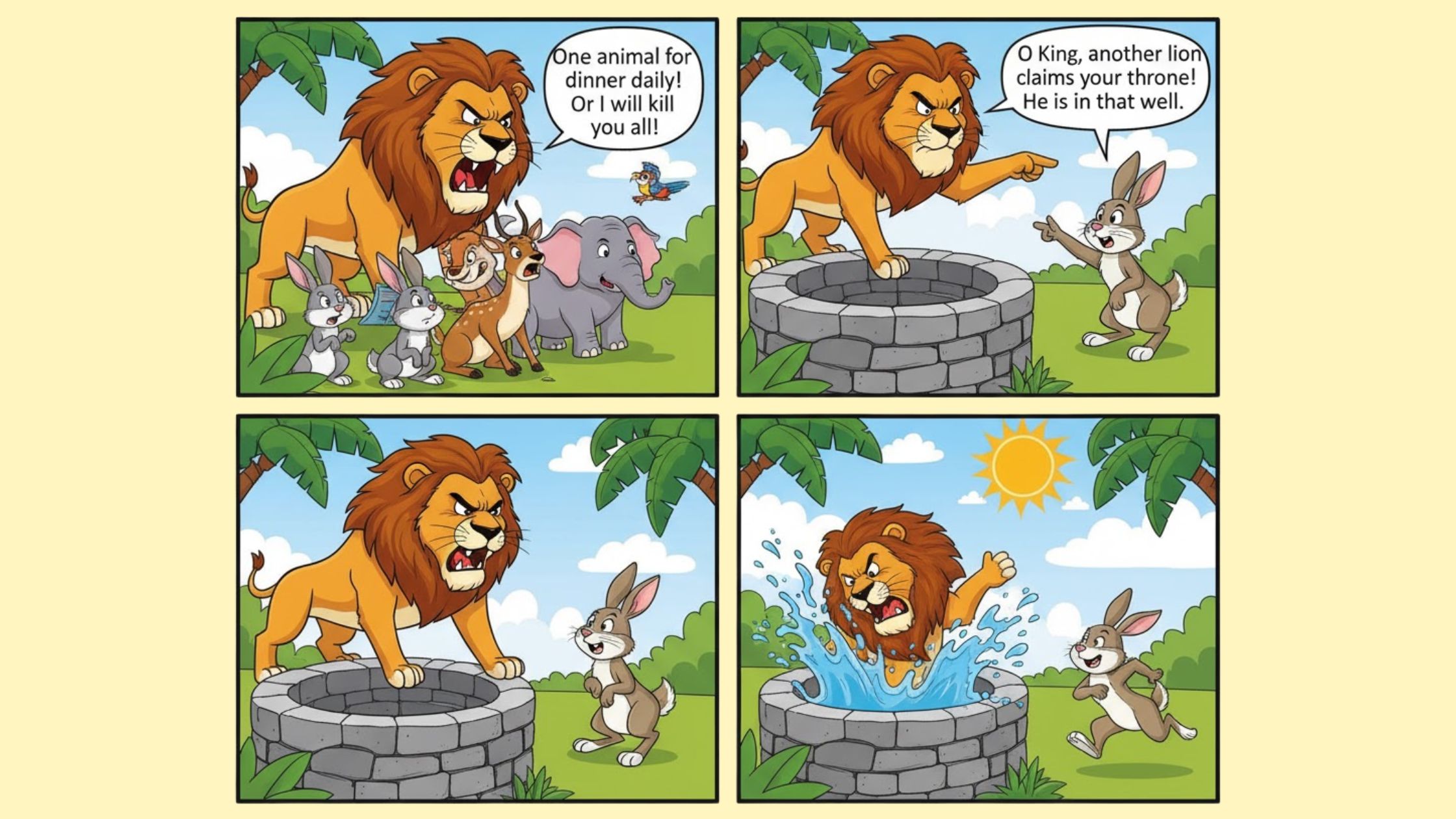
A ferocious lion terrorizes the jungle animals, eating them one by one daily. As he was the king of the jungle, he made a rule that every animal has to come one day for his dinner, otherwise he will kill everyone in the jungle. To save themselves, the animals send a clever rabbit to him, who tricks the lion by saying that he can eat him, but there is a problem. When I was coming to your cave I found another lion in the well, saying that he is the king of this jungle, and he will eat me. The lion went with him to the well and started fighting his reflection in the well. The lion falls in and drowns, saving the forest.
Moral: Intelligence triumphs over brute strength.
3. The Tortoise and the Geese
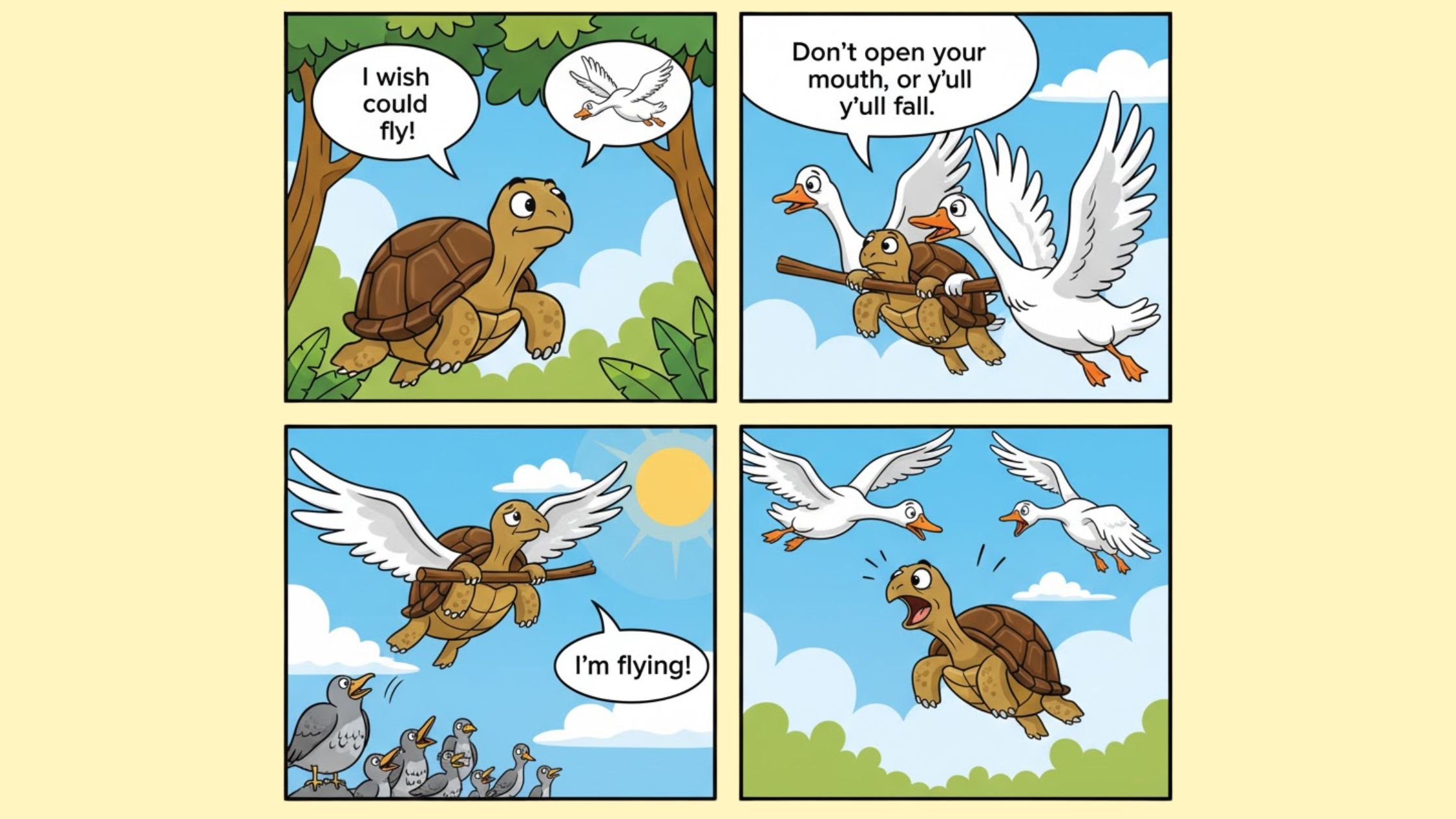
A tortoise wishes to fly for so long it becomes his dream to fly, and after talking to every bird in the jungle, he finally convinces two geese to carry him with a stick held in his mouth. Both the geese agreed to help the tortoise fly once in his life and fulfill his dream. Despite their warning to remain silent and not open his mouth, otherwise he will fall from the sky, the tortoise opens his mouth to speak and falls to the ground badly. Which made him regret his mistake.
Moral: Know when to stay quiet and follow advice.
4. The Blue Jackal
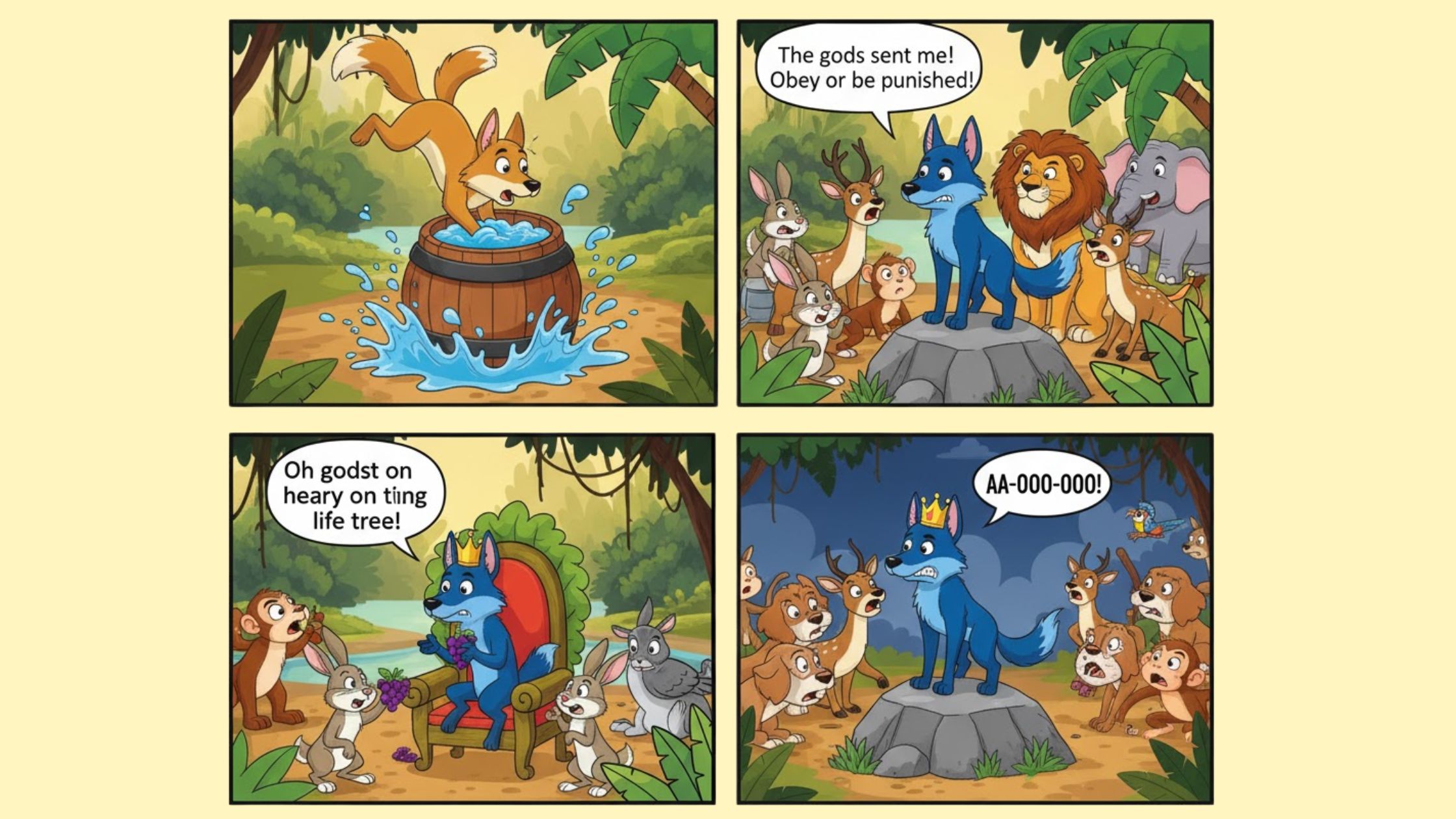
A jackal accidentally falls into a vat of blue dye and decides to become the “King of the Jungle”. He said to all the animals that the god has sent him to take care of this village, and the one who will not obey his order, the god will punish him. All the animals in fear accepted him as their new king and started to obey all his orders. He fools the other animals, but his cover is blown when he howls like a jackal. The animals chased him away, and he was thrown out of the jungle.
Moral: Pretending to be someone you’re not will eventually backfire.
5. The Wise Pigeon and the Hunter

A hunter lays a net to trap pigeons, and a flock gets caught. The wise leader pigeon advises them to flap their wings together to lift the net. They escape and land near a mouse friend, who chews through the net and frees them.
Moral: Unity and teamwork can overcome any problem.
6. The Snake and the Ants
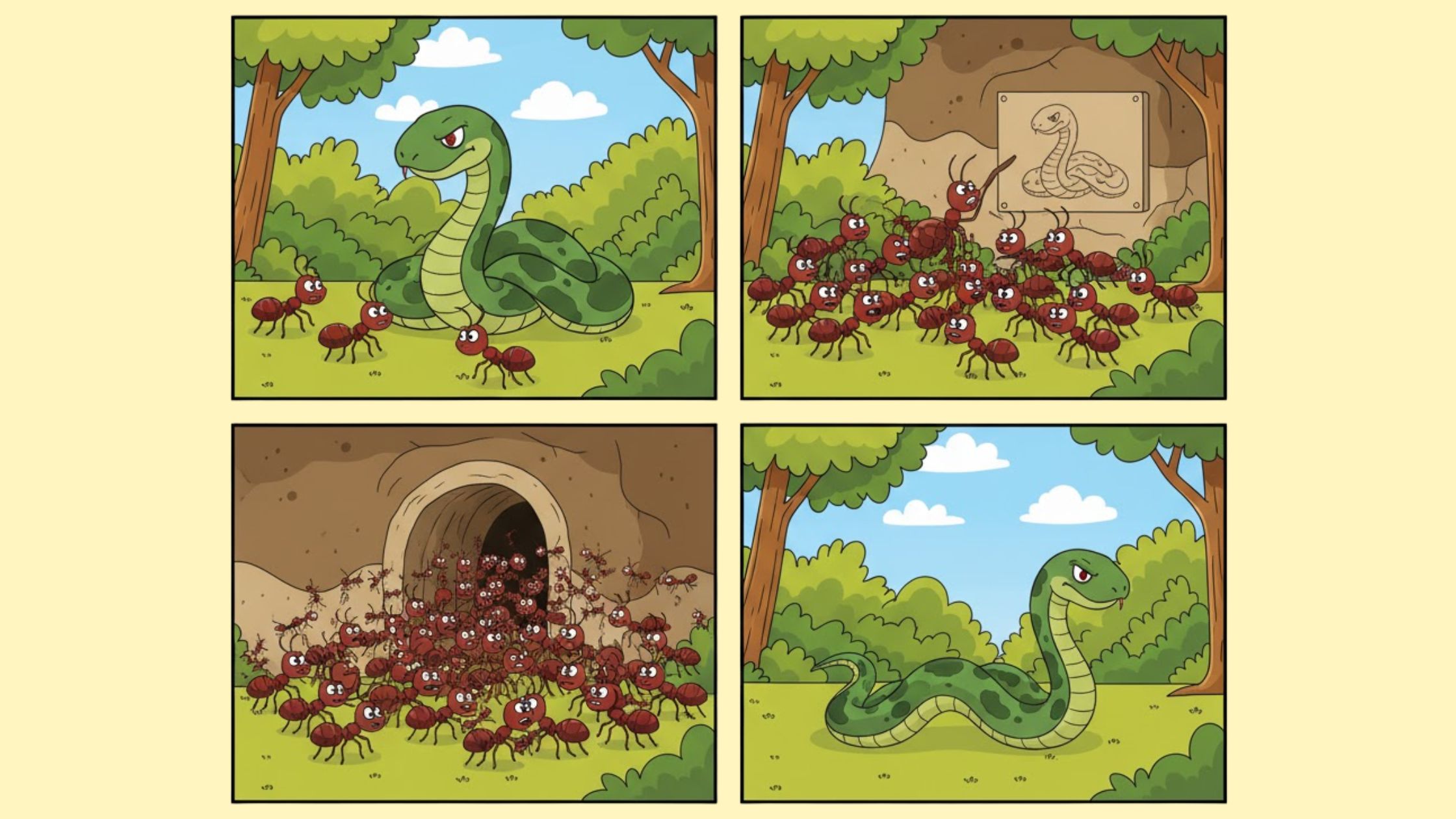
A cruel snake invades an anthill, eating the ants badly. When all the ants get in trouble, they make a plan to attack the snake secretly in large numbers, bite the snake until it flees the anthill in pain, never to return.
Moral: Strength lies in unity and collective effort.
7. The Mouse and the Elephant
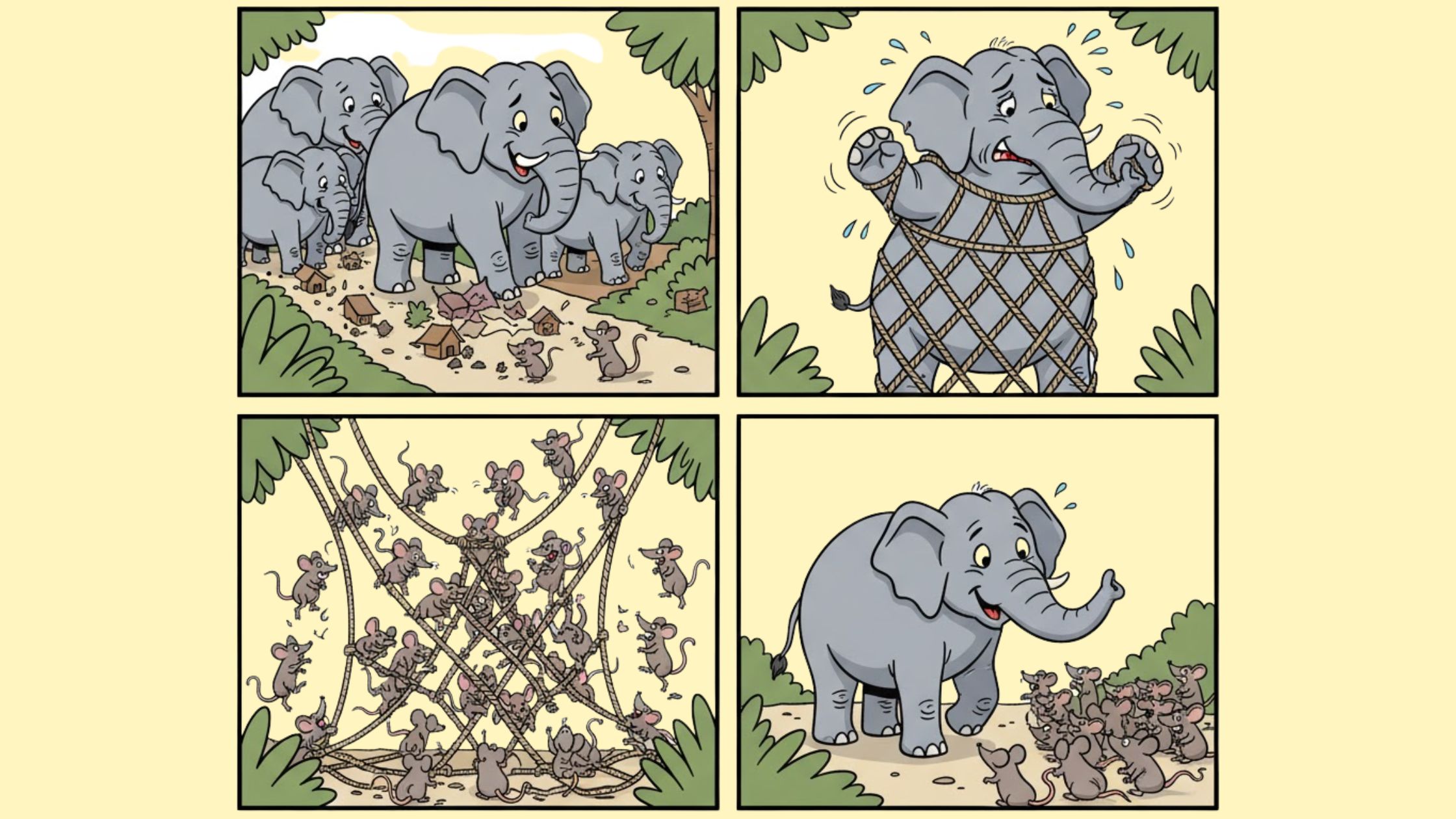
A group of egoistic elephants accidentally tramples on a mouse village, thinking that they are small mice who can’t do anything, and starts to laugh at them. When one elephant gets trapped later, the mice help free him with all his friend’s cuts of the trap, showing that even the smallest creature can be a great ally.
Moral: Never underestimate anyone, no matter how small.
8. The Greedy Crane
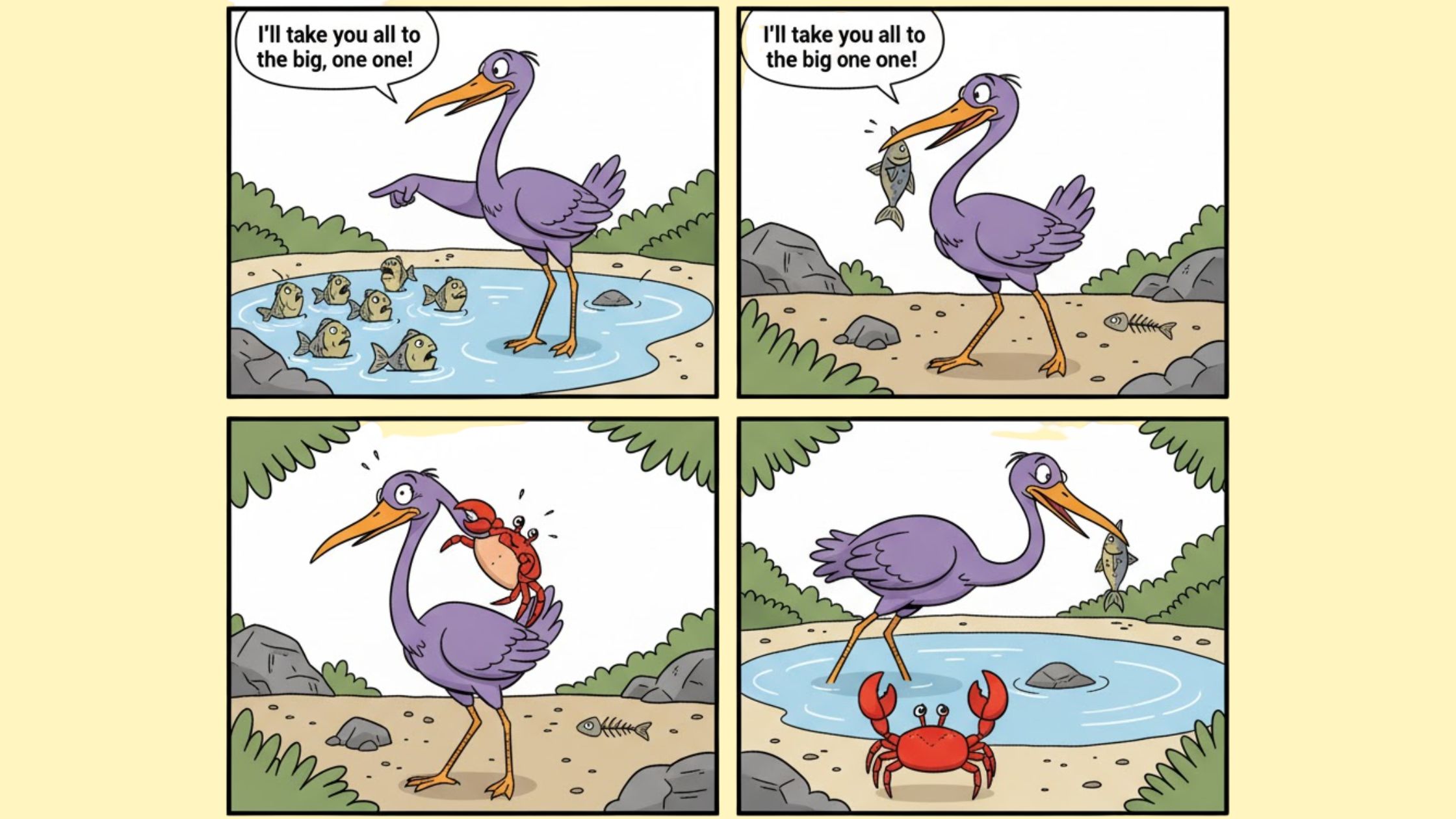
A cunning crane offers to transfer fish from a drying pond to a bigger one, making all fish trust her. They all agree, but the crane finds this an opportunity and starts to eat all the fish instead. After some time, the fish start to doubt the crane, they decide to send a crab this time. When he tries to do the same with a clever crab, the crab pinches his neck badly and escapes.
Moral: Greed and dishonesty lead to downfall.
9. The Talking Cave
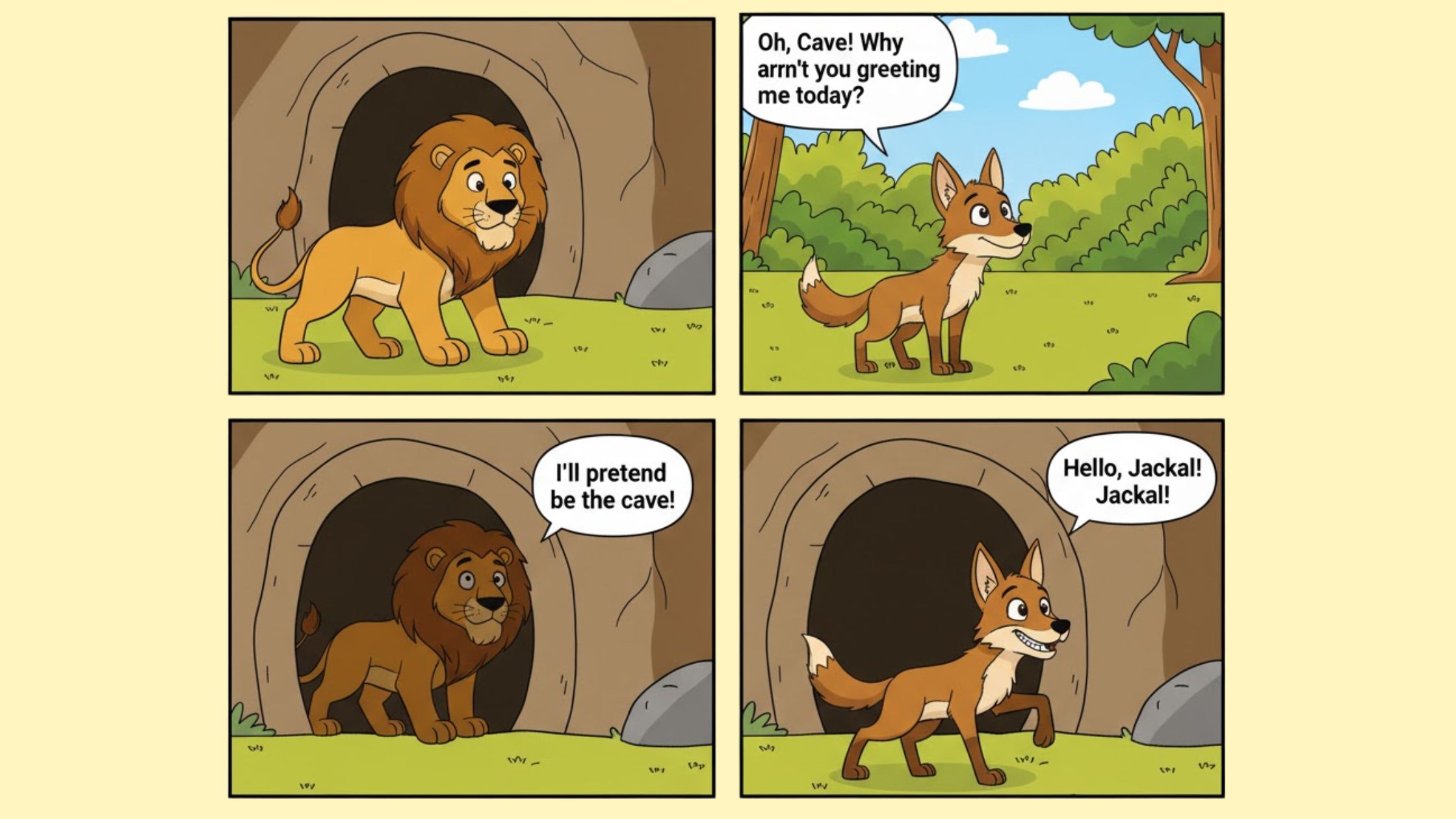
A lion finds an empty cave and hides inside to ambush its inhabitant. A clever jackal senses danger from the lion inside the cave and pretends to talk to the cave, exposing the lion’s presence. The jackal runs away safely by making the lion a fool.
Moral: Always stay alert and use caution in unfamiliar situations.
10. The Sparrow and the Elephant
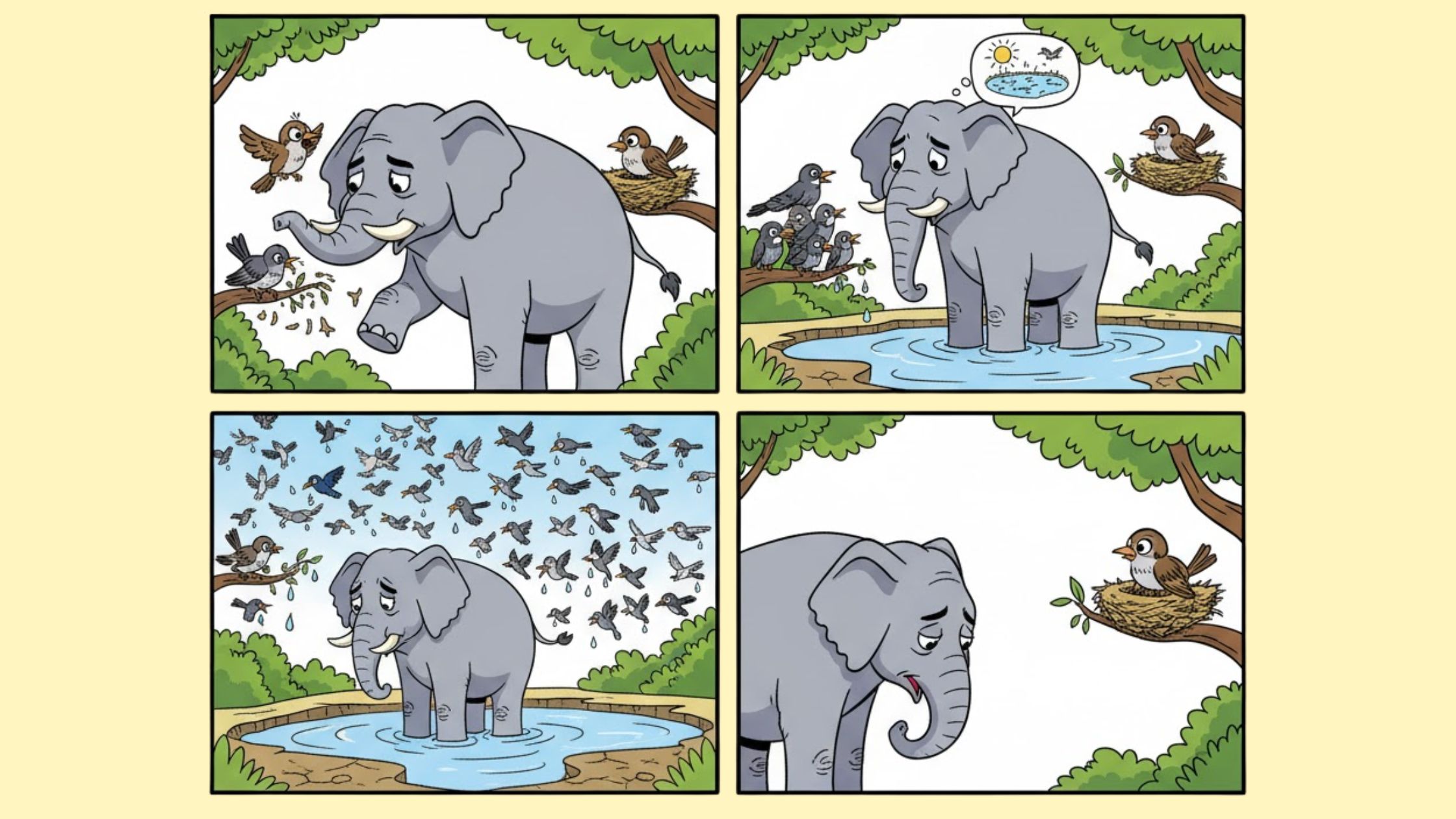
An elephant destroys a sparrow’s nest out of arrogance. The sparrow, with the help of her bird friends, planned to teach a lesson to the elephant, devising a clever plan to humble the elephant and protect her home. They all planned to make the pond dry, and they did the same with teamwork, all the elephants got in trouble for drinking some water. After realizing their mistake, the head of the elephant went to the sparrow and asked for mercy and accepted their mistake.
Moral: Teamwork and determination can overcome even the strongest foes.
11. The Boastful Bullock
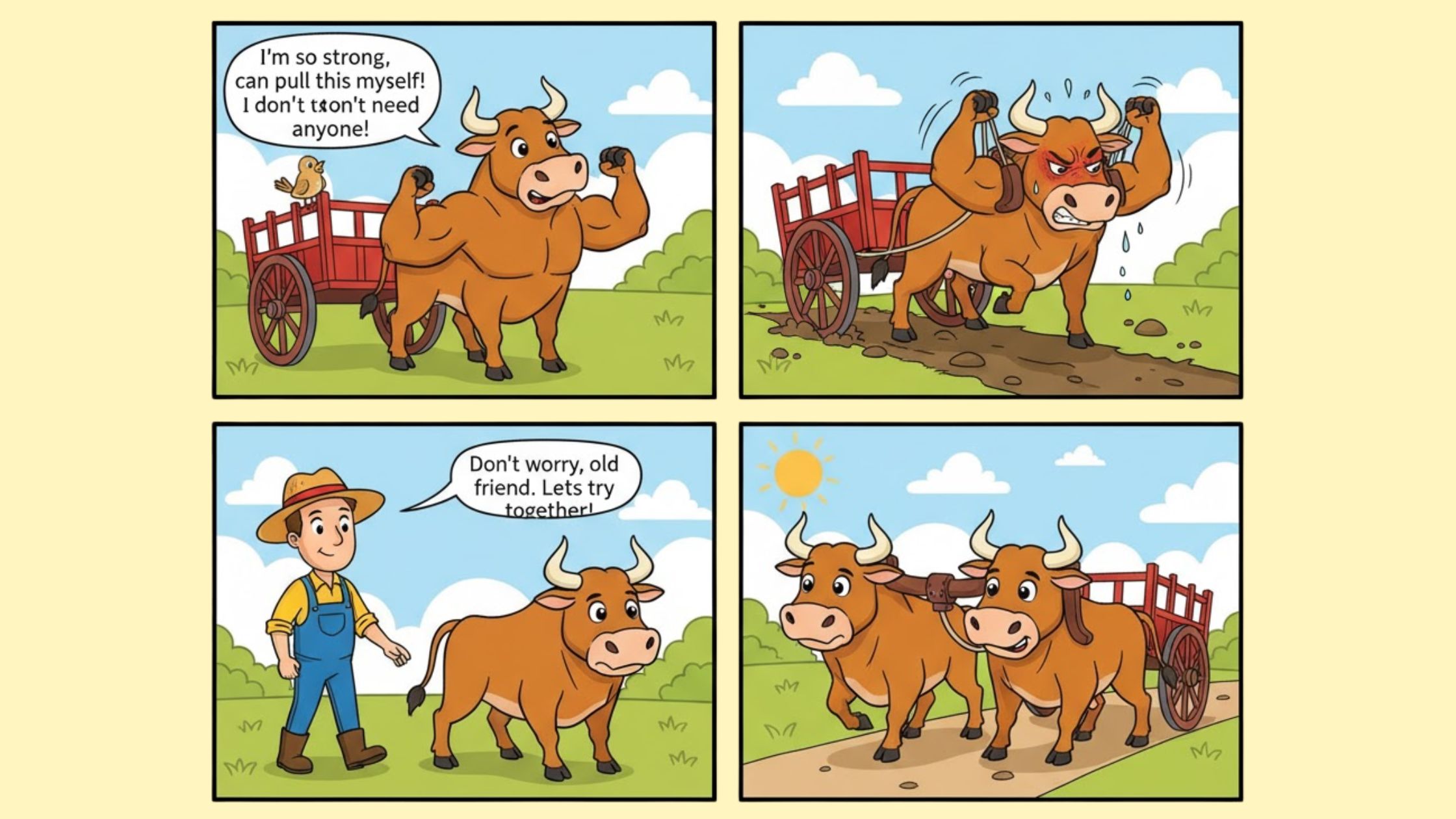
A bullock brags about being strong enough to pull a heavy cart on his own, and he started to become egoistic. However, when the time comes, he struggles and fails. His farmer pairs him with another bullock, and together they complete the task with ease.
Moral: Overconfidence can lead to failure, teamwork achieves more.
12. The Elephant and the Tailor
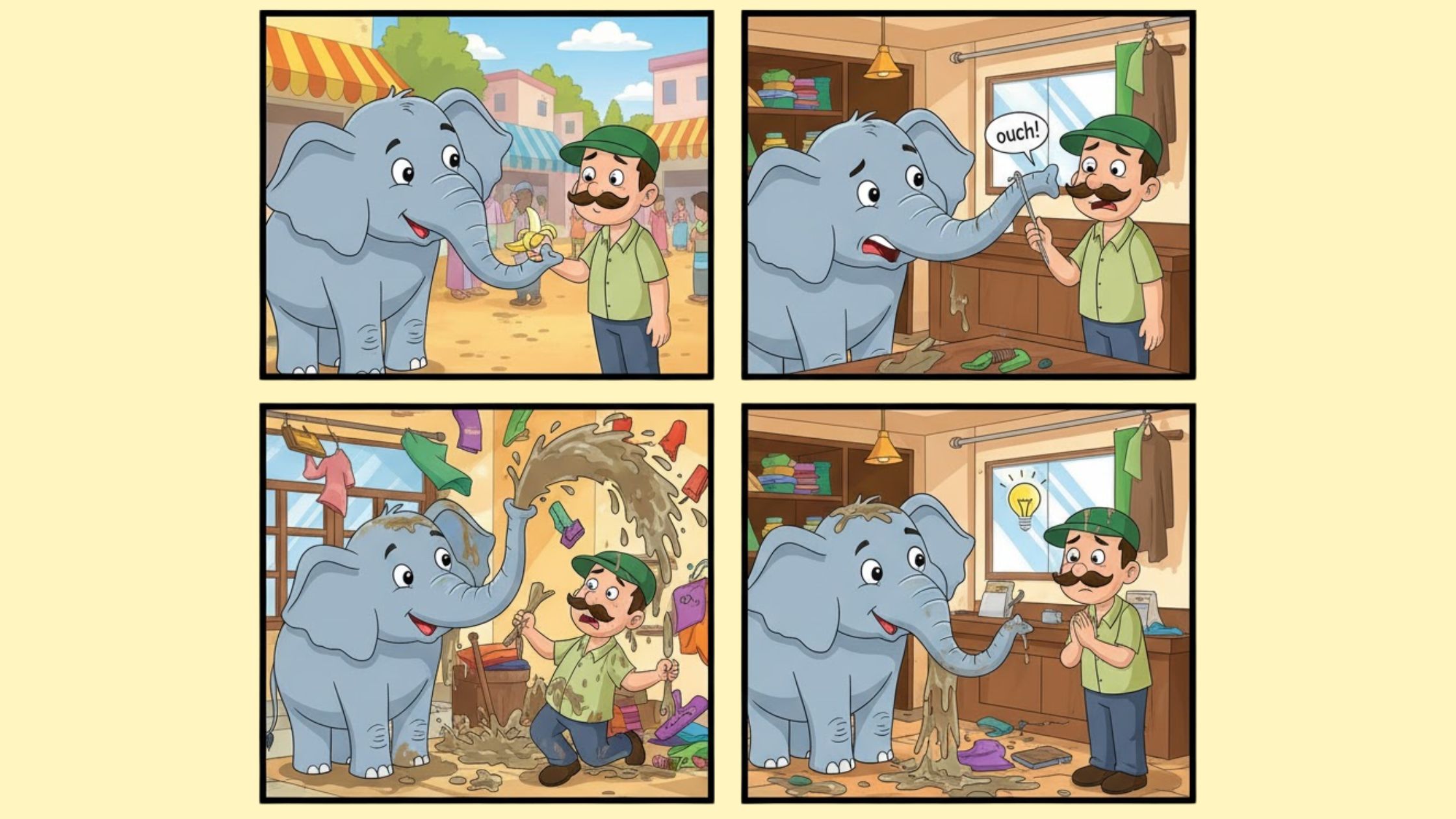
An elephant visits a tailor every day for bananas. One day, the tailor, in a bad mood, pricks the elephant with a needle as he was bored by giving him bananas. The elephant fills his trunk with water and sprays it all over the tailor's shop in revenge. He realises his mistake and thinks he will behave with anyone with a positive approach.
Moral: Treat others with kindness to receive kindness in return.
13. The Donkey in the Tiger’s Skin
A donkey thinks of wearing a tiger’s skin to scare people and freely eat crops without any problem. With the skin of the tiger, he can easily roam around and eat anything he wants. But his loud braying gives him away, and he is chased off by the farmers and beaten badly.
Moral: Pretending to be someone you’re not will eventually reveal the truth.
14. The Mice and the Elephant Herd
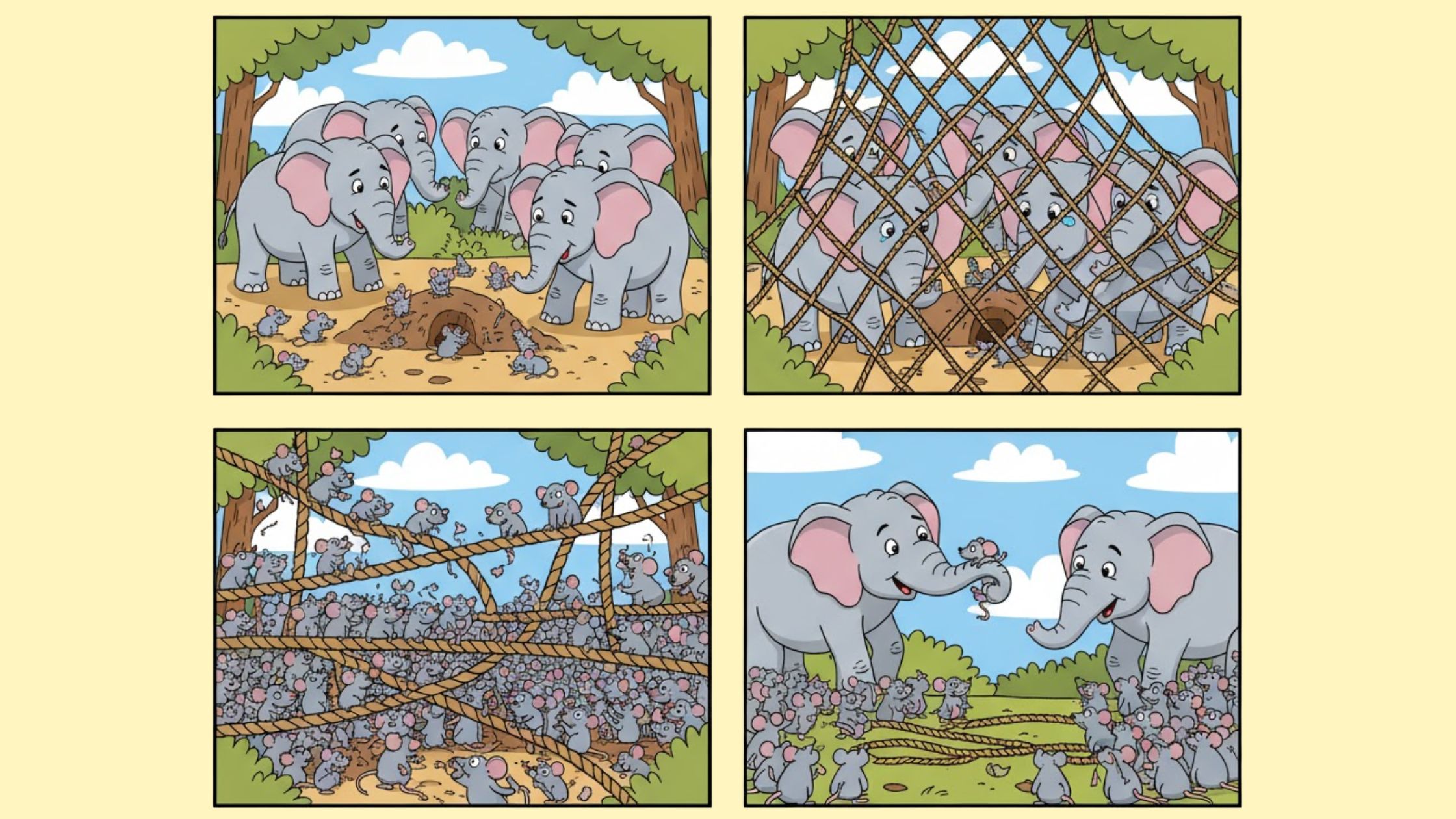
A herd of elephants unknowingly destroys a mouse village. When hunters trap the elephants later, the mice come to their rescue, chewing through the ropes to free them.
Moral: Acts of kindness are never wasted.
15. The Farmer and the Cobra
A kind farmer saves a cobra during a famine and saves his life after putting in a lot of effort, but the ungrateful cobra bites him when the farmer was sleeping in the night. The farmer realizes that some creatures cannot be trusted.
Moral: Be cautious about whom you help.
16. The Camel and the Jackal
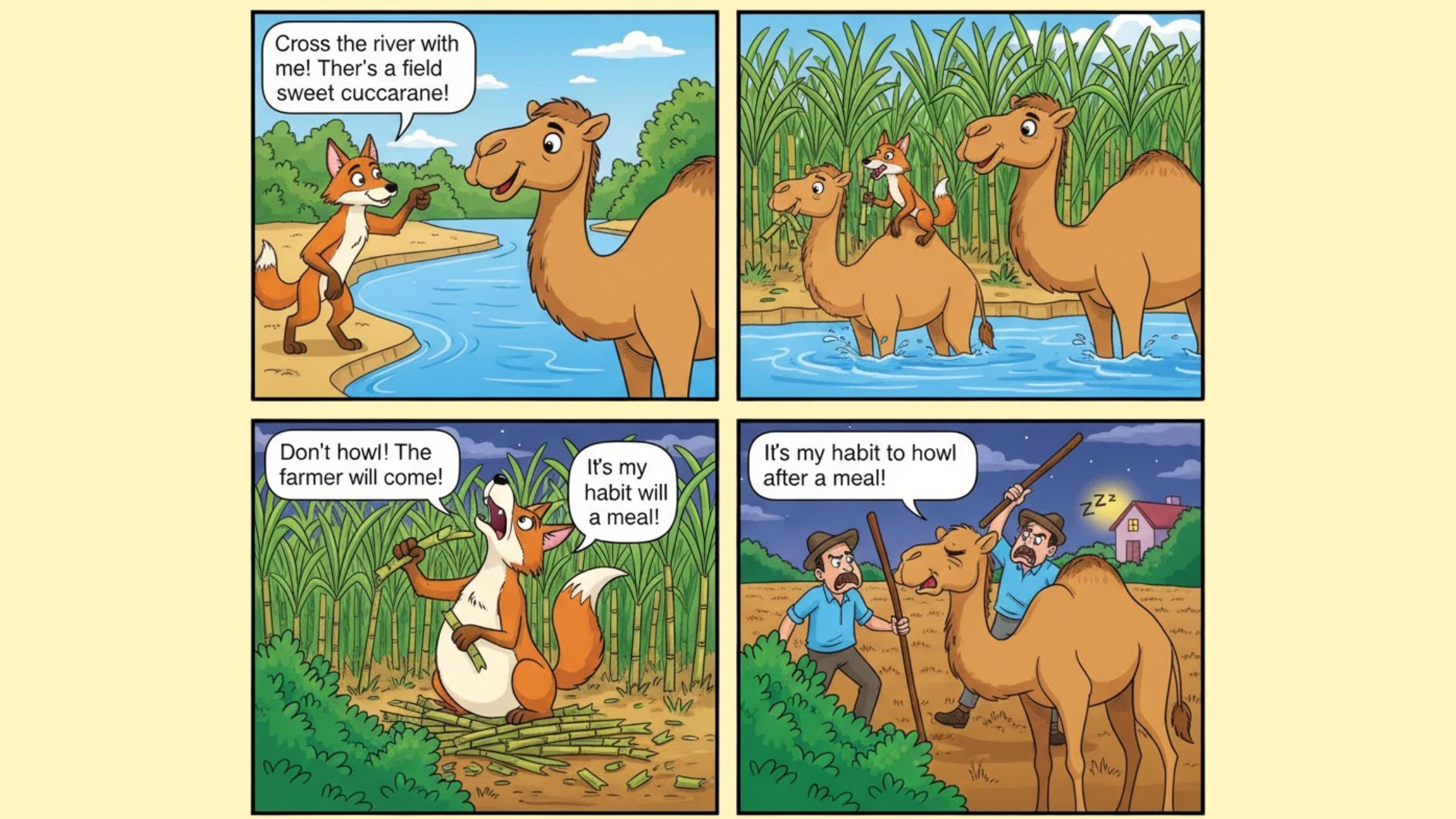
A jackal persuades a camel to visit a field for food behind the river. The camel agreed to do so and carried the jackal on his back and helped him cross the river. They both started to eat sugarcane after some time. Jackal was full, but the camel wasn't he was eating, and he started to howl. The camel told him to not do, so otherwise farmers will come with long sticks. The jackal replied that it was his habit to howl after eating. But the jackal’s selfish actions put them both in trouble. The farmer came running, and Jackal hid him in the bushes, and the camel was badly beaten by the farmers. The camel’s kindness is not returned by the cunning jackal.
Moral: Choose your friends wisely.
17. The Bird and the Monkeys
A bird advises monkeys to build shelters to protect themselves from the rain, but the monkeys destroy the bird’s nest in anger. As the monkey did not like to receive the command from the birds and got angry.
Moral: Giving advice to those unwilling to accept it is futile.
18. The Weaver and the Princess
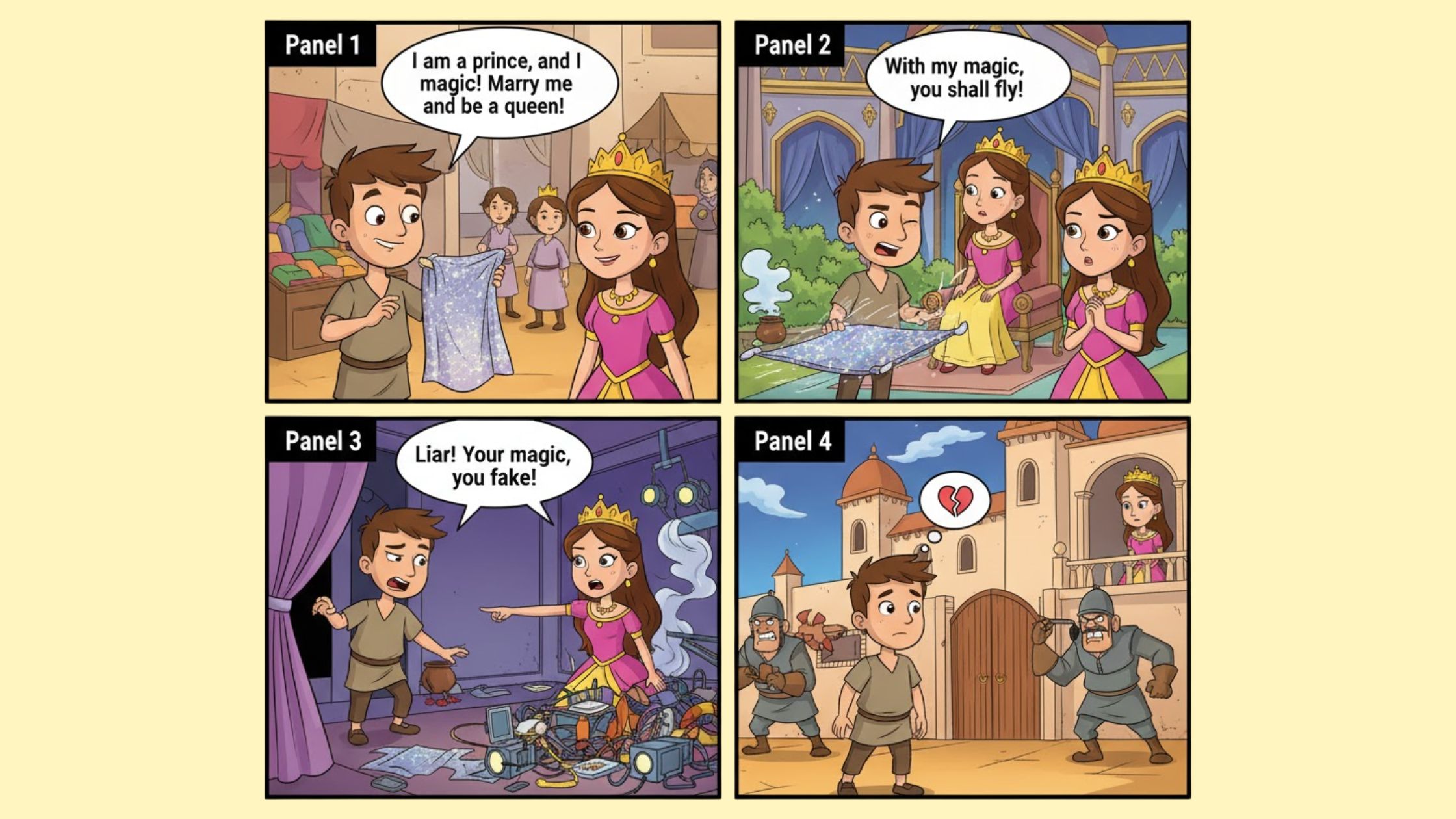
One day a clever weaver found a princess near the shop, and he started to talk to her, and he got to know that she was a princess, but as he was very clever, he also introduced himself as a prince. Then he started tricking his way into marrying a princess by creating fake magical illusions. However, his deceit is discovered by the princess one day, and he loses everything.
Moral: Honesty is always the best policy.
19. The Crows and the Black Snake
A cunning black snake eats crow eggs every day without them knowing. When the crow gets to know about this, he plans to drop a gold necklace into the snake’s hole to attract people who remove the snake from the hole and get the necklace. This saved his eggs and life from the snake.
Moral: Teamwork and intelligence can solve even the biggest problems.
20. The Old Man and the Gold Coins
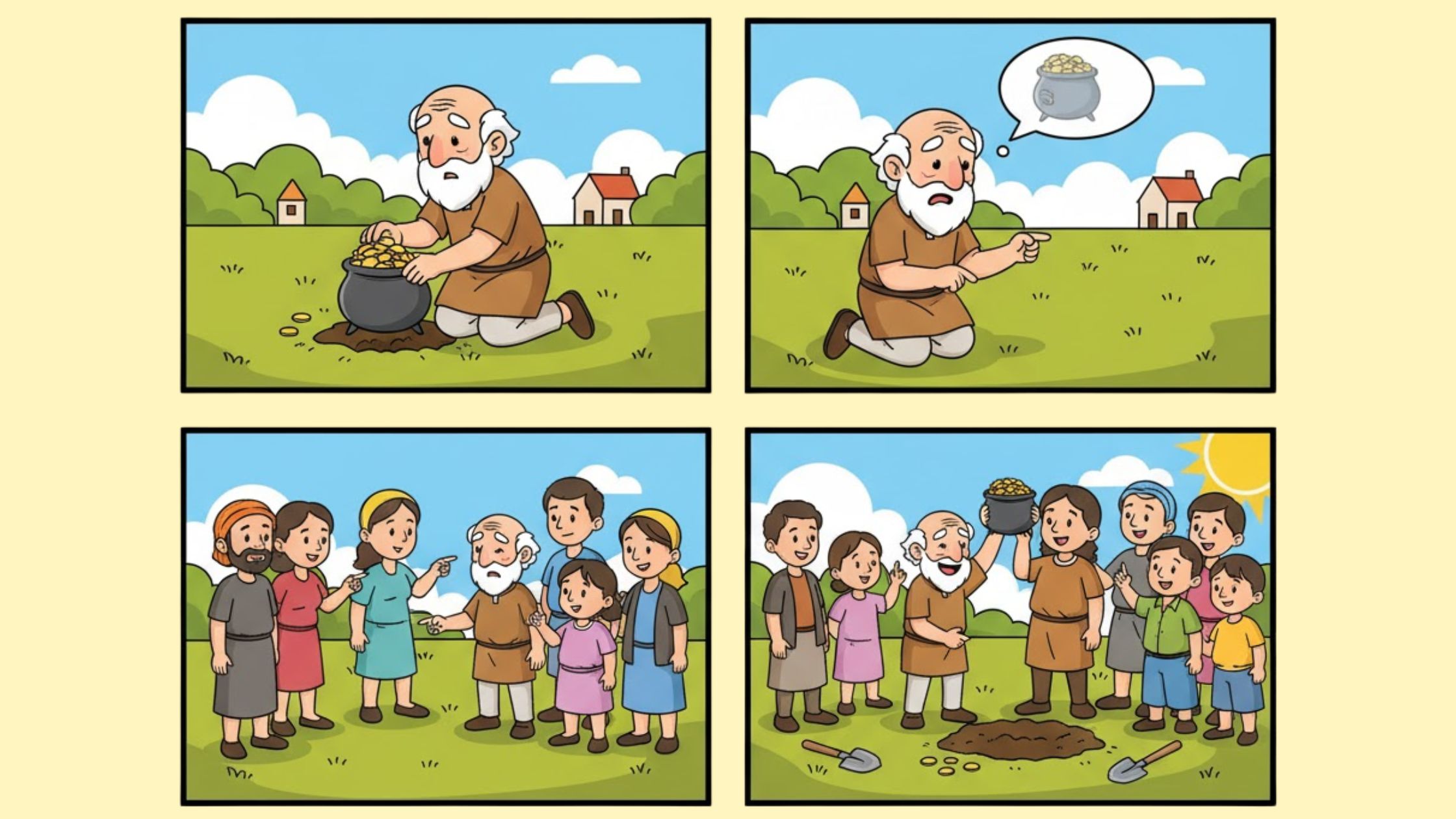
An old man buries his gold in a field but forgets its location as he was getting old. His honesty wins him back the treasure when the villagers help him find it.
Moral: Honesty and humility are always rewarded.
Why Panchatantra Stories Are Perfect for Kids
Panchatantra stories are a treasure of life lessons wrapped in fun and engaging plots. They teach values like teamwork, honesty, and kindness in a way that’s easy for kids to understand and remember.
Tips to Make Story time Special:
- Start an open discussion after completion of each story with your child.
- Start with one story a day so that discussion leads to building.
- Relate the moral to real-life examples to make their learning more engaging.
So make sure to enjoy these best Panchatantra stories with your child and make them learn the important lessons of life, as these lessons are powerful and important for every child to know. Story time should be relation-building time for your family.
FAQs
What is the meaning of the title “Panchatantra”?
The word Panchatantra comes from Sanskrit: pancha meaning “five” + tantra meaning “treatise or principles”. The collection is divided into five books, each teaching different aspects of life through fables.
Who wrote the Panchatantra stories?
The traditional attribution is to the scholar Vishnu Sharma, who is said to have composed these tales to teach young princes.
What age group are these stories best for?
While the blog’s target seems to be children, other sources suggest that these tales are appropriate for kids roughly 4-10 years old, depending on reading level and interest.
Can reading Panchatantra stories improve a child’s reading and moral skills?
Yes — because the stories combine entertainment with values, they can engage children and help build both comprehension and ethical reasoning. For example: “These Panchatantra stories help kids learn important values like honesty, friendship, and wisdom.”
